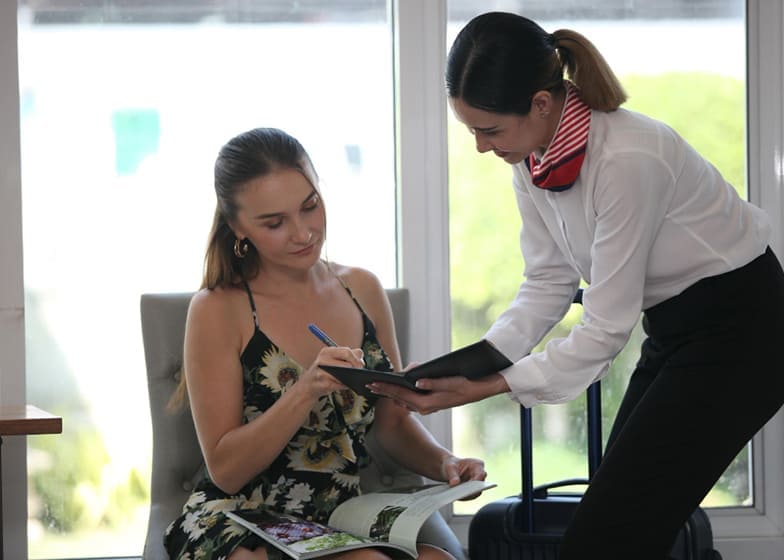



Become a Airline Customer Service Agent - $28,000 to $45,000 per year
Airline Customer Service Agents are the first point of contact for passengers, providing essential support and guidance throughout their travel experience. They play a critical role in ensuring a smooth, safe, and enjoyable journey by assisting with reservations, check-ins, baggage handling, and resolving customer inquiries or concerns. This role requires strong communication skills, patience, problem-solving abilities, and a deep understanding of airline policies and procedures.
Agents work both at the airport and via remote channels such as phone, email, or chat, helping passengers navigate travel complexities and maintain a positive perception of the airline. They must be adept at handling high-pressure situations, managing diverse passenger needs, and ensuring compliance with safety and security regulations. The role is ideal for individuals who enjoy interacting with people, thrive in fast-paced environments, and are committed to providing exceptional customer service.
Core Responsibilities
Airline Customer Service Agents are responsible for providing efficient, professional, and courteous assistance to passengers throughout their travel journey. They serve as the primary point of contact for travelers, helping with check-ins, flight changes, baggage issues, and general inquiries. Their role requires attention to detail, strong communication skills, and the ability to handle challenging situations while maintaining a positive passenger experience. Below are the key responsibilities of an Airline Customer Service Agent:
- Greeting passengers and providing guidance on airport procedures, boarding, and flight schedules
- Assisting with check-in processes, including verifying identification, issuing boarding passes, and handling seat assignments
- Handling ticketing requests, flight changes, cancellations, and upgrades
- Providing information on baggage policies, fees, and resolving lost or delayed luggage issues
- Responding to passenger inquiries via phone, email, or in-person at the airport
- Managing special passenger requests such as accessibility assistance, unaccompanied minors, or pet travel
- Resolving conflicts or complaints professionally, ensuring passenger satisfaction
- Collaborating with airport operations, flight crew, and security teams to ensure smooth service delivery
- Monitoring and enforcing airline policies, safety procedures, and government regulations
- Documenting passenger interactions, complaints, and resolutions in airline systems for accountability and reporting
Daily Tasks & Workflow
Airline Customer Service Agents follow a structured daily workflow to ensure passengers receive timely and accurate assistance throughout their journey. Their day typically involves monitoring flight schedules, managing check-ins, assisting with ticketing or boarding issues, and resolving passenger inquiries. By following a consistent workflow, agents help maintain smooth airport operations, high levels of passenger satisfaction, and compliance with airline and safety regulations.
Throughout the day, agents handle multiple tasks simultaneously, from greeting passengers and verifying documents to coordinating with airport operations and flight crew. They prioritize urgent issues such as delayed flights or baggage discrepancies while ensuring routine inquiries are addressed efficiently. This approach ensures a seamless passenger experience and supports the airline in meeting its operational goals.
1. Greeting & Assisting Passengers
Agents begin by welcoming passengers and providing guidance on check-in, boarding, and airport procedures.
Where it’s used
- Checking-in passengers at counters or self-service kiosks
- Providing boarding passes and seat assignments
- Answering initial questions about flights, gates, or delays
Example
- Greeting passengers at the counter, issuing boarding passes, and answering questions about flight delays.
2. Handling Ticketing & Flight Changes
Agents manage ticket purchases, changes, cancellations, and upgrades, ensuring smooth transactions for passengers.
Where it’s used
- Processing flight bookings and ticket modifications
- Upgrading passengers and managing loyalty program benefits
- Ensuring payment and refund processes are accurate
Example
- Helping a passenger reschedule a missed flight and issuing an updated boarding pass while maintaining accuracy in the system.
3. Baggage Assistance & Issue Resolution
Agents handle inquiries related to baggage, including lost, delayed, or damaged luggage.
Where it’s used
- Tagging and tracking checked luggage
- Resolving lost or delayed baggage claims
- Providing information on baggage fees and restrictions
Example
- Assisting a passenger in locating a delayed bag and updating the tracking system for follow-up.
4. Addressing Special Requests & Accessibility Needs
Agents assist passengers with special needs, including accessibility accommodations, unaccompanied minors, or pet travel.
Where it’s used
- Providing wheelchair or mobility assistance
- Coordinating unaccompanied minor travel procedures
- Assisting passengers traveling with pets or medical equipment
Example
- Helping a passenger with a mobility impairment board safely and coordinating with flight crew for additional support.
5. Collaborating with Airport Teams & Reporting
Agents communicate with airport operations, flight crew, and security teams to resolve issues and maintain operational efficiency.
Where it’s used
- Coordinating with gate agents and ground staff for smooth boarding
- Escalating urgent situations, such as flight delays or emergencies
- Documenting passenger interactions, complaints, and resolutions in airline systems
Example
- Reporting a boarding disruption to the operations team while updating the passenger system to track delays and complaints.
Required Skills and Qualifications
Airline Customer Service Agents need a combination of communication, problem-solving, technical, and interpersonal skills to assist passengers effectively and maintain smooth airport operations. The role requires professionalism, patience, attention to detail, and the ability to handle high-pressure situations. Agents must be familiar with airline systems, reservation platforms, and airport procedures. Below are the essential skills and qualifications to excel in this role:
- Communication & Interpersonal Skills: Ability to clearly and professionally interact with passengers, colleagues, and airport staff, providing accurate information and building trust and rapport.
- Customer Service & Empathy: Patience and understanding to handle frustrated or anxious passengers, ensuring positive experiences even during delays or disruptions.
- Problem-Solving & Critical Thinking: Quick assessment of passenger issues, identifying solutions, and escalating complex situations appropriately.
- Technical & System Proficiency: Knowledge of airline reservation systems, ticketing platforms, boarding software, and CRM tools for tracking passenger interactions and flight data.
- Organizational & Multitasking Skills: Managing multiple passengers, inquiries, and operational tasks simultaneously while maintaining accuracy and efficiency.
- Attention to Detail: Verifying tickets, passports, IDs, and boarding passes, ensuring compliance with airline policies and security requirements.
- Teamwork & Collaboration: Coordinating with gate agents, flight crews, security, and operations teams to resolve issues quickly and maintain smooth workflow.
- Adaptability & Stress Management: Remaining calm under pressure during flight delays, cancellations, or emergency situations, while adapting to changing schedules and passenger needs.
- Knowledge of Safety & Regulations: Understanding airport safety, TSA guidelines, and airline policies to assist passengers and ensure compliance.
- Language Skills: Proficiency in multiple languages is a plus, enabling agents to assist international passengers more effectively.
Successful Airline Customer Service Agents combine these skills to provide exceptional passenger experiences, support operational efficiency, and maintain high standards of professionalism. Continuous learning and staying updated on airline policies and industry trends are crucial for career growth in this field.
How Much You Can Earn?
Earnings for Airline Customer Service Agents vary depending on experience, location, airline size, and job responsibilities. Most positions offer a stable annual salary, with opportunities for overtime pay and performance-based incentives. Specialized skills such as multilingual proficiency, VIP passenger handling, or expertise in specific airport operations can increase earning potential. Below are the common compensation structures for this role:
1. Entry-Level Salary
Entry-level Airline Customer Service Agents typically handle ticketing, check-in, and basic passenger inquiries. They gain hands-on experience with airline systems and operational procedures while providing foundational customer service.
Typical Annual Earnings:- Entry-level agents: $28,000-$32,000 per year
- Roles focused on basic check-in, boarding, and passenger assistance
2. Mid-Level & Experienced Salary
Agents with experience managing escalated passenger issues, handling VIP clients, or working in high-traffic airports can earn higher salaries. These positions often involve additional responsibilities, including supervising boarding procedures or coordinating with other airport departments.
Typical Annual Earnings:- Mid-level agents: $32,000-$38,000 per year
- Experienced or specialized agents: $38,000-$45,000+ per year
3. Performance-Based Incentives
Some airlines offer additional earnings through bonuses or incentives tied to customer satisfaction, efficiency, or operational excellence. Agents who consistently meet or exceed performance targets may receive extra compensation.
Typical Incentive Earnings:- Monthly performance bonus: $100-$300
- Quarterly customer service recognition bonus: $300-$800
- Annual bonus for exceptional service: $500-$2,000+
Career Growth and Advancement Opportunities
Airline Customer Service Agents have strong opportunities for career growth as they gain experience, certifications, and specialized skills. Starting with foundational customer service roles, agents can advance into supervisory, operational, or specialized positions within the airline or airport environment. Career progression often comes with higher compensation, increased responsibility, and opportunities to work with larger teams or manage more complex passenger services.
1. Senior Customer Service Agent
With experience handling complex passenger inquiries, high-traffic situations, and VIP clients, agents can advance to senior-level roles. These positions involve mentoring junior staff, managing escalated issues, and providing guidance for smooth airport operations.
- Handling escalated passenger complaints and service issues
- Providing guidance and support to new or junior agents
- Assuming leadership responsibility during peak operational hours
2. Gate Supervisor or Team Lead
Experienced agents can move into supervisory positions such as Gate Supervisor or Team Lead. These roles include overseeing boarding processes, coordinating gate staff, and ensuring compliance with airline policies and safety regulations.
- Supervising a team of customer service agents at the gate
- Monitoring boarding, flight updates, and passenger flow
- Ensuring operational efficiency and passenger satisfaction
3. Specialized Roles
Agents can specialize in areas such as VIP or frequent flyer services, international travel coordination, or airport lounge management. Specialization increases expertise, visibility within the company, and earning potential.
- Managing high-value or VIP passenger services
- Coordinating international flights and specialized passenger needs
- Handling premium lounge operations and customer experiences
4. Customer Experience or Operations Coordinator
With a strong understanding of passenger needs and airport operations, agents may advance into roles focused on overall customer experience, operational planning, or process improvements. These positions often involve cross-department collaboration and strategic decision-making.
- Improving passenger experience and operational efficiency
- Collaborating with airport operations, ticketing, and security teams
- Implementing programs to enhance service quality and passenger satisfaction
As airlines continue to prioritize customer service and passenger experience, experienced Airline Customer Service Agents benefit from strong job stability. Continuous skill development, certifications, and exceptional service delivery ensure long-term career growth and adaptability in a dynamic industry.